


#11 My Friend Nicky
View group questions.
To print this group, add it to a test.
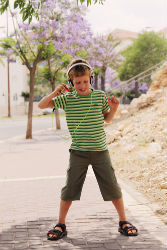 I see Nicky sometimes throughout the day in my classes. He comes in with some other kids, and they have special teachers that help them with their work in the back of my classroom. Sometimes, I see Nicky yell or cry or make noises in class when I don' t expect it.
I asked my teacher about why he does that, and she told me that Nicky has autism. She told me I shouldn't be scared of him or anything like that because his autism is what part of makes him a fun and special kid. She said, “Nicky's autism just means that his brain was made differently when he was a baby, so sometimes he will say or do things that might not make sense at first, but if you get to know him, you'll see he feels and sees things just the same as you and me.”
I saw Nicky on the playground later, and I decided to try to be friends with him. He was swinging on the swingset, and I said, “Can I come swing with you?”
He didn't answer me at first, but he smiled at me and kept swinging. I remembered what my teacher said, and I realized that he heard me, and he didn't respond in a way I expected, but his smile meant he was happy that I was talking to him. I wasn't sure what to talk with him about first, but then I remembered that I saw him last week in my art class.
“Do you like to draw, Nicky?” I asked.
His face lit up, and he said “Yes!” He started to hum and flap his hands, and he stopped swinging and skipped away. I wasn't sure what it meant when he started making noises and hand motions, but I knew what yes meant. The recess bell rang, and I started walking back towards the school. Nicky came up to me and walked beside me with other kids and teachers from his class. I waved to him as we went to different classes throughout the day. Sometimes he saw me and smiled, sometimes he waved back, and sometimes he didn't do anything when I waved.
I asked my teacher again later about what it meant when he started to make noises on the playground earlier. She told me that,“Sometimes, Nicky gets excited, and since his brain was made differently, he doesn't say 'I really like that!' and he moves his hands or sings instead.”
I was excited that I had something to talk to him about tomorrow, because now I was 100% certain that he was telling me he likes drawing. I told my parents about my new friend Nicky at dinner that night, and they were happy to hear more about him.
The next day at school, I tried to talk to him before we even went to recess. But today, he was crying and yelling. I was scared, and I wanted to help make him feel better, but I didn't know how. I didn't know the right thing to ask or tell him, and I didn't want to make him more upset. I ran to my teacher, asking why he was so upset today when he was fine yesterday.
She replied, “Part of Nicky's autism means that he has bad days just like you and me, but he reacts to them differently. He likes to do things in a certain routine sometimes, and his routine may have gone differently and stressed him out. Sometimes, certain places are overwhelming to him, and he might be upset about that. He isn't mad at you or anyone else, but he might just be having a bad day because of things like this.”
I understand what it's like to have a bad day, so when I saw him later at recess, I waved to him again to try to make him feel a little better.
Throughout the school year, I learned what Nicky liked to do, to eat, to talk about, and a lot more about him in a lot of ways. Some days I would talk and play with him at recess. Some days I helped him with his math. Some days I went to his classroom to eat lunch with him.
When other kids would ask me about why he was different, I was able to explain to them, “Nicky has autism. But don't be scared of him or make fun of him, because his autism is part of what makes him so funny and such a good friend to me!”